



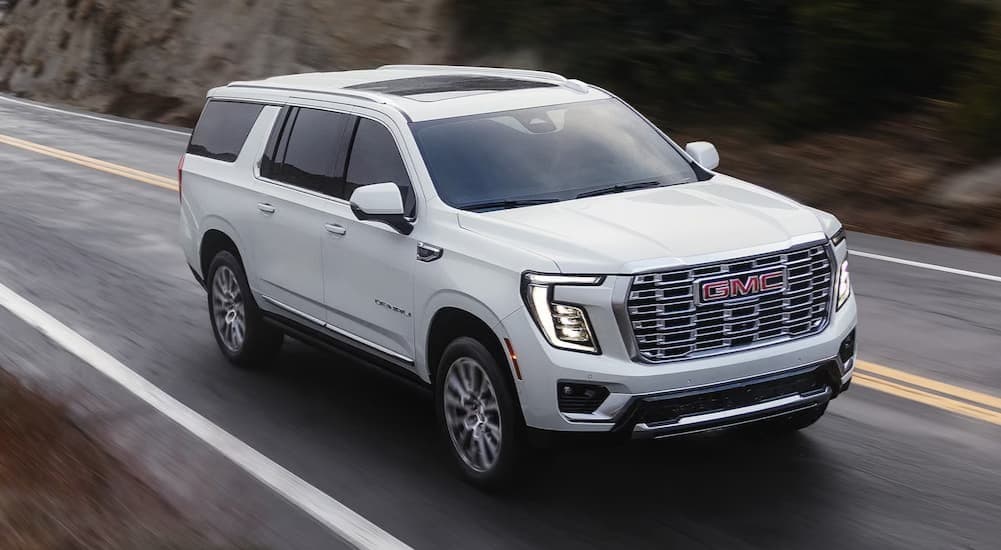
Many drivers are familiar with full-size SUVs like the Yukon, knowing that these behemoths are ideal for transporting large families and travelers all over the nation. The GMC Yukon is a fan favorite for many, offering a spacious cabin and sophisticated features to enhance the quality of any journey. If you’re looking for more space, the larger Yukon XL offers it.
If you’re in the market for a GMC Yukon for sale, you may be wondering if your driving habits warrant the use of the larger XL version, and here at Lupient Buick GMC, we’re here to help. You may just assume that the XL is just a slightly stretched-out version of the Yukon.
However, their differences run deeper than that.
Let’s discover what makes the Yukon and Yukon XL different from one another and which one is better suited to your unique needs behind the wheel.
Yukon vs Yukon XL: Key Differences
Both the Yukon and Yukon XL are highly accommodating SUVs, trusted by parents and adventure enthusiasts everywhere, but these two models aren’t quite the same. There are stark differences between these two three-row haulers; differences that will most likely turn you toward one model over the other. Let’s explore them.
Overall Size
As the name suggests, the Yukon XL is an oversized version of the full-size Yukon, and it’s not just slightly larger; it’s significantly larger in wheelbase, width, and length. Its wheelbase is over a foot longer than the standard Yukon, which results in increased length, thus affecting space on board, which we’ll get into in a moment.
Not only that, but the Yukon XL is wider as well. This results in a more assertive and robust stance, compared to the Yukon, making the Yukon XL a top pick for those who require a more commanding vehicle with a sturdier build and enhanced on-board space.
Passenger Comfort
This increased space affects the interior cabin experience for those riding inside the Yukon XL, especially those seated in its third row. Traditionally, three-row vehicles have a tough time offering enough space for adult-sized passengers seated in the way back; however, in the Yukon XL, third-row passengers benefit from its increased width and length, with more headroom, shoulder room, and legroom than what’s offered on board the Yukon.
Many Yukon models offer 34.9 inches of legroom in the third row, while the Yukon XL offers 36.7 inches. These few extra inches in the Yukon XL go a long way in ensuring a more comfortable ride for more of your passengers.
Cargo Capacity
Another area that benefits from this extra length and width is the cargo hold, and if you’re one of the many who need ample space for gear, you’ll want to look closely at the Yukon XL. The standard Yukon can accommodate 25.5 cu.ft. of cargo with all of its seats intact, while the Yukon XL offers space for 41.5 cu.ft. of cargo.
With one set of seats folded down, the standard Yukon can accommodate up to 72.5 cu.ft., while the Yukon XL can take on up to 93.6 cu.ft. With the second and third-row seats folded, the Yukon offers a maximum cargo capacity of 122.8 cu.ft., compared to the Yukon XL, which can handle up to 144.5 cu.ft.
As you can see, this is quite a difference and may be the deciding factor for those searching for a full-size SUV with more space.
Fuel Capacity
Something you may not think much about is your fuel tank, but it plays a major role in how often you have to stop at the gas station. The standard Yukon has a 24-gallon fuel tank, while the Yukon XL has a 28-gallon tank. This makes the Yukon XL better suited for longer journeys, since it can hold more fuel and thus extend the time between fill-ups.
What You’ll Find in Both
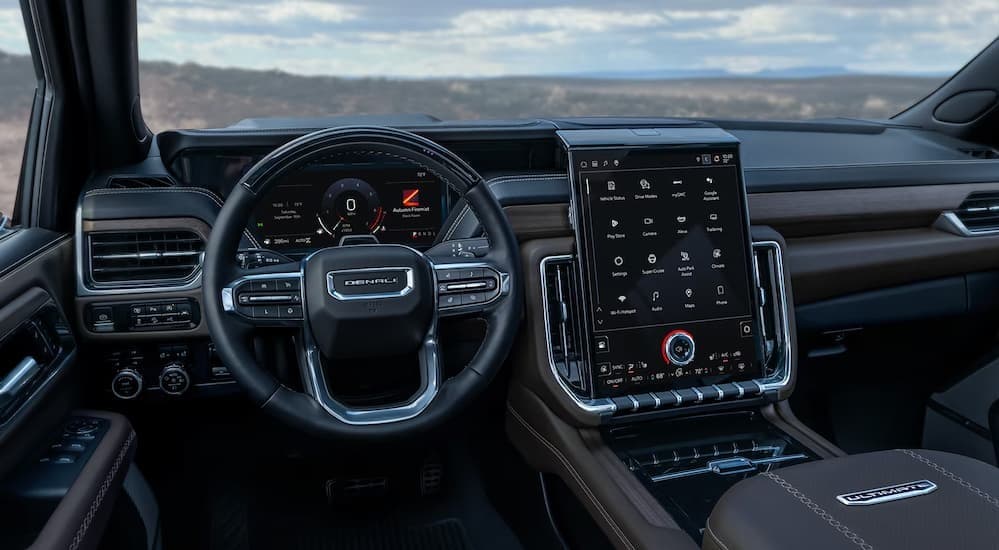
Despite their differences, the Yukon and Yukon XL share many features, including powertrains, technology, and trims.
Both models can be equipped with a 5.3L V8, a 6.2L V8, or a 3.0L turbo-diesel, making it easy to achieve the ride quality and power you need for your day-to-day life. You will also find the same arsenal of trims available for both, including the upscale Denali and Denali Ultimate, the rugged, off-road-ready AT4 lineup, and the entry-level Elevation in the 2026 inventory.
Many of the same features can be enjoyed in both models, including Super Cruise hands-free driving capabilities, Night Vision, a 16.8-inch infotainment display, and more standard and available equipment to make the most of your drive.
You’ll also get to take advantage of available Four-Corner Air Ride Adaptive Suspension in many trims to create the ultimate ride quality, raising and lowering itself to crawl over obstacles and increase performance on the highway and beyond.
Choose the Yukon If…
So, now that you know the differences between each model, which Yukon is right for your needs? Well, seeing as the Yukon is slightly smaller than the Yukon XL, it’s highly suitable for those who need ample space but don’t want to drive a hulking vehicle around town. This particular model is better for city driving, as its smaller size makes it easier to handle on packed city streets and to navigate dense traffic on the highway.
This smaller size also makes the Yukon easier to park, fitting into tighter spaces at the grocery store or tricky streetside parking spaces with ease. The Yukon is a great pick for families, especially those in more urban areas with plenty of traffic and pedestrians, as it’s not too cumbersome, but it’s plenty accommodating.
If you’re looking for a daily driver that can handle various traffic situations and environments, the Yukon is a fantastic pick for you.
Choose the Yukon XL If…
The Yukon XL’s larger stature makes it a commanding and confident driver; however, it’s not ideal for every driving situation, especially bustling cities and cramped environments. It is, however, a great choice for longer journeys, making it a top pick for avid road trippers and adventure seekers. Its rugged, robust build holds up better on rough terrain, and with a larger fuel tank, you’ll be able to fill up for a long trek without worrying about finding a gas station right away.
Its expanded space also makes it a go-to option for travelers hauling more people and gear. Although the Yukon and Yukon XL both offer three rows of seating, the Yukon XL provides more interior space, making it much easier for everyone on board to sit back and relax during the journey. You will also have more cargo space, whether you’re just using the space behind the rear seats or folding all the seats down to make way for as much gear as you can pack.
Yukon vs Yukon XL: Which Should You Choose?
To make this decision, you have to consider what your daily drives entail. Do you find yourself coasting down city streets or embarking on long road trips? Do you need as much space as possible on board, or are you looking for a vehicle that’s spacious yet easy to handle?
These are some of the questions that you’ll want to ask yourself. Rest assured, both the Yukon and Yukon XL are phenomenal full-size options for families, road trippers, adventurers, and others who require ample space, refined features, and an unmatched ambiance of excellence surrounding them as they make their way to their next destination.
Find your perfect Yukon at Lupient Buick GMC.
Connect with us


- Buick Dealer
- Buick Enclave for Sale in Golden Valley
- Car Lease
- GMC Acadia for Sale in Golden Valley
- GMC Canyon for Sale
- GMC Dealer
- GMC Dealer Near Plymouth
- GMC Dealer Near Wayzata
- GMC Sierra 1500 for Sale
- GMC Sierra 1500 for Sale in Golden Valley
- GMC Sierra 1500 for Sale Near Brooklyn Park
- GMC Terrain for Sale
- GMC Terrain for Sale in Golden Valley
- GMC Yukon for Sale
- Used Cars for Sale
- Used Trucks for Sale